Socialism with a human face
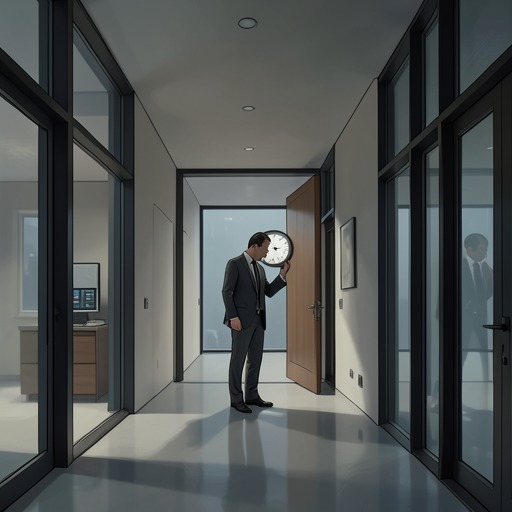
The Glass Room“Socialism with a human face” names a hope for political reform in the novel, but its meaning is unstable: it appears first as an official invitation to acknowledge past wrongs and reopen relations with the West, then as a question about whether reform has already ended. Doctor Tomáš’s image of a country waking from—and falling back into—a coma gives that hope a fragile, temporary form.
A phrase of political opening
During a visit connected with the Landauer family’s return, Veselý asks Liesel to consider the invitation in light of recent change in the country. He presents it as part of an effort to restore normal relations with neighboring countries, open toward the West, and discuss and admit past errors. His formulation, “Socialism with a human face,” casts the visit as more than a private or administrative matter: it is offered as evidence of a broader political opening.
Landor rejects that account, accusing the visitors of using his mother in a political game while seeking recognition of their ownership of the house. Veselý answers that the stakes are not merely a game to the people of Czechoslovakia, describing the matter as one of life and death. The phrase therefore enters a conflict over who can define the visit: a family’s encounter with dispossession, or a public sign of political change.
Liesel’s question to Tomáš
Later, at a gathering, Liesel speaks with Doctor Tomáš outside on the terrace while speeches continue indoors. She asks whether the future is still hopeful and whether “Socialism with a human face” is over. Her question carries the earlier promise into a more intimate exchange, where the issue is no longer only how the visit should be interpreted but whether the reforming moment can endure.
Tomáš answers through the history of encephalitis lethargica, a rare sleeping sickness. He describes patients who remained suspended for decades and were awakened by L-Dopa, a drug tried on sufferers after a major outbreak in the 1920s. The analogy turns political change into an experience of sudden return: patients wake to a world that has moved on, and must confront how much of their lives has passed.
Awakening and relapse
Tomáš stresses that L-Dopa’s effect wears off. Increasing the dose does not prevent the patients from slipping back into sleep, while doctors can only watch helplessly. He applies the same pattern to his country: it has awakened, but may soon fall back into a coma. His prediction that he may not still be there in six months gives the analogy a personal consequence and makes political hope inseparable from the threat of renewed repression.
Liesel hears shadows in Tomáš’s laughter and recognizes an echo of Viktor’s laugh, while admitting that she trusts Tomáš partly because blindness has taught her to listen to voices. The phrase thus remains unresolved at the close of their conversation. It expresses the possibility of a more humane political order, but the awakening-and-relapse image denies any assurance that the change will last.